
Why Do People Celebrate Half Birthdays? 7 Real Reasons Explained
Ask someone why they celebrate their half birthday and you’ll usually get a shrug before the explanation. “I don’t know, it’s just fun,” they’ll say. Then, almost without fail, they’ll talk for another five minutes about exactly why it matters to them.
That contradiction is basically the whole story of the half birthday — a celebration nobody can quite justify on paper, and almost everybody defends the moment you ask them to give it up.
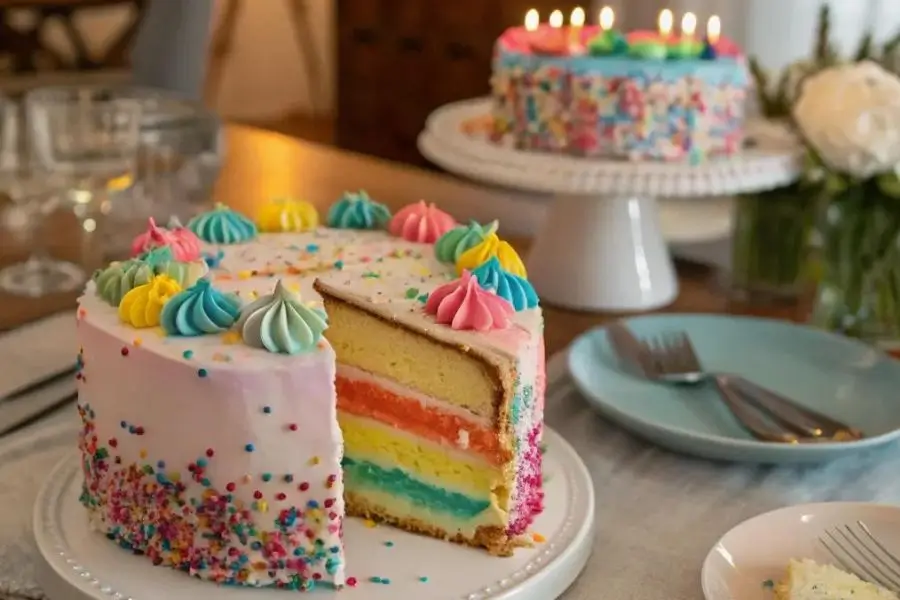
There’s no law that says a year only gets one party. Somewhere along the way, a lot of people decided the calendar’s halfway point deserved a little recognition too, and the tradition stuck around long enough to become its own small institution — complete with half-cakes, half-candles, and parents arguing in Facebook groups about whether it’s silly or sweet.
So what’s actually going on here? Why did an entirely made-up date — six months from the day you were born — turn into something people plan around, post about, and occasionally take more seriously than the real thing?
- Summer-born kids miss classroom parties
- Babies reach key 6-month milestones
- Holiday birthdays get overshadowed
- Adults use it as a mid-year check-in
- Low-stakes excuse to reconnect with friends
- Businesses use it as a second touchpoint
What Counts As a Half Birthday, Exactly?
The simple version: your half birthday lands six calendar months from your birthday, same day of the month. Born March 12? Your half birthday is September 12. Easy enough. Check out our half birthday calculator to find it quickly. Just type the birthday and it will show you the birthday date and the remaining days.
The catch is that “six months” isn’t a fixed number of days — it just feels like it should be. February has 28 days, July has 31, and a leap year throws an extra day into the mix. Mathematically, half of a 365-day year is 182.5 days, not a clean six calendar months. Most people don’t care about that level of precision and just count six months forward, but it does create a few genuinely funny edge cases. Anyone born on August 30 or 31 runs into the problem that February 30 doesn’t exist, so their “half birthday” technically rounds to March 1 instead. It’s a small, almost charming reminder that we built this whole tradition on top of a calendar that wasn’t designed to split evenly in half.
The School Cafeteria Is Where This Really Started

If you trace the half birthday back to its most common origin story, you end up in an elementary school classroom in June. Most schools have some version of a birthday ritual — a cupcake, a paper crown, the whole class singing, a kid getting to be the line leader for the day. It’s a small thing, but to a seven-year-old it’s not small at all.
Now picture a kid born in July. School lets out before their birthday even arrives, and by the time everyone’s back in September, the moment has quietly evaporated. No cupcake, no song, no crown. Just a birthday that happened somewhere in the empty months when nobody was around to notice.
Teachers and parents figured out a workaround decades ago: just move the celebration. A child born July 15 gets their classroom moment on January 15 — smack in the middle of the school year, when their friends are actually there.
The same logic ends up rescuing kids whose real birthday gets steamrolled by something else entirely — like sharing a date with Christmas, New Year’s, or Thanksgiving week. Try having a birthday on December 23 and see how much attention is left over once everyone’s mid-holiday. A June half birthday, with nothing else competing for the spotlight, often ends up being the celebration that actually feels like it belongs to that kid.
Babies Get a Real Milestone Out of It

For parents of infants, the six-month mark isn’t an arbitrary date — it’s one of the biggest jumps in a baby’s entire first year. By six months, most babies have roughly doubled their birth weight, started sitting up with support, begun smiling and laughing on cue, and started showing real interest in faces, voices, and eventually food. That’s an enormous transformation packed into half a year, and a lot of parents feel like the first birthday is simply too far away to be the only checkpoint worth marking.
So the half birthday becomes a kind of unofficial progress report — a milestone photo, a tiny cake the baby is allowed to destroy, a candle that’s really more for the parents than the baby. It doesn’t compete with the first birthday; it just acknowledges that a baby’s first year contains way more change than a single party can hold.
Adults Caught On, and It Got Surprisingly Big
What’s newer — and a little more interesting — is how many adults have started treating their own half birthday as a legitimate occasion rather than a kid thing they aged out of. A few years back, the Wall Street Journal ran a piece describing twenty- and thirty-somethings throwing actual dance parties, themed picnics, even half-birthday trips, all built around a date that has zero official status anywhere.
Some of that is just an excuse to have more fun in a calendar that can otherwise go quiet for months. If your birthday’s in January, you spend the back half of the year with nothing on the books; a July half birthday breaks that up nicely. People with December and January birthdays in particular seem to gravitate toward this — their real birthday already competes with holiday fatigue and resolution season, so the summer half birthday becomes the version that actually feels celebratory.
But there’s a psychological piece underneath the party-planning, too. Researchers who study how people set and stick to goals talk about something called the “fresh start effect” — the idea that landmarks on the calendar, even arbitrary ones, make people more likely to pause, reflect, and recommit to whatever they’re working toward. New Year’s Day works this way. So, evidently, does the middle of the year.
A half birthday in June gives someone a built-in excuse to ask “how’s this year actually going?” without waiting until December, when it’s often too late to do much about the answer.
There’s also just the plain social value of it. A half birthday is low-stakes in a way a real birthday isn’t — no expectation of a big gift, no obligation to throw a proper party, no pressure on anyone. What it does give people is a reason to reach out. A text, a small treat, a “hey, I remembered” — in a year where friendships can drift through sheer busyness, that’s not nothing.
Businesses Noticed Too
Once enough people started caring about their half birthday, it didn’t take long for brands to notice. Bakeries run half-birthday cake promotions. Subscription boxes send a little something at the six-month mark. Some loyalty programs and restaurants have started treating it as a second touchpoint in the year — a low-cost way to make a customer feel remembered without waiting for their actual birthday to roll around. It’s a small example of a bigger pattern: any tradition that gets enough emotional buy-in eventually gets commercialized, whether it started in a classroom or not.
The Half Birthday Has Cousins
Once you start dividing a year into pieces, it turns out people don’t stop at two. Here are the other date milestones that share the same basic impulse:
The year you turn the age that matches your birth date — like turning 25 on the 25th.
Three months after your birthday. Popular for baby milestones and personal goal tracking.
3.14159 years old — a tongue-in-cheek milestone celebrated by the mathematically inclined.
Growing on social media — half “gotcha days” for dogs and cats, complete with miniature treats.
None of these carries any official weight. That’s sort of the point. They’re all just different answers to the same basic itch: one celebration a year doesn’t always feel like enough, so people quietly invent more.
It’s Not Actually a New Impulse
It’s worth saying that splitting a year in half isn’t some strange modern invention — calendars have been doing it for a very long time. Imbolc, the early February festival marking the midpoint between the winter solstice and the spring equinox, has been observed for centuries. Leon Day, which falls on June 25 — exactly six months before Christmas — has its own small but devoted following among people who treat the holiday season as a year-round mindset.
The half birthday fits comfortably into that same tradition: humans dividing time into smaller, more manageable, more celebratable chunks because waiting a full year for a single moment of recognition has never quite satisfied anybody.
So Why Do People Actually Do It?
Strip away the cake and the calculator apps, and the half birthday is really just a low-stakes answer to a high-stakes problem: a single annual date can’t always carry the weight we want it to. It can’t rescue a summer-born kid’s classroom moment. It can’t compete with Christmas. It can’t capture six months of a baby’s development in one sitting. And for a lot of adults, one birthday a year just isn’t enough of an excuse to pause, take stock, and let someone know they’re thought of.
Nobody needs permission to celebrate one. There’s no rulebook, no required guest list, no minimum cake size. It’s a date that asks nothing of anyone and offers whatever you want to put into it — which, it turns out, is exactly why it caught on in the first place.
Frequently Asked Questions
What is a half birthday?
A half birthday falls exactly six months after your actual birthday. Born March 12? Your half birthday is September 12. It marks the midpoint of your personal year and is used for celebrations, milestone tracking, and classroom recognition.
Why do people celebrate half birthdays?
People celebrate half birthdays to give summer-born children a classroom celebration when school is in session, to mark a baby’s six-month developmental milestone, to break up the year for people whose real birthday falls near a major holiday, and as a personal mid-year check-in tied to the “fresh start effect” studied in behavioral psychology.
When did half birthdays become popular?
The classroom tradition for summer-born kids has existed for decades. The adult trend gained visibility more recently, with outlets like the Wall Street Journal covering twenty- and thirty-somethings hosting actual events built around the date.
How do you calculate a half birthday?
Keep the same day number and move the month forward by six. If the resulting month doesn’t have that day (e.g. born August 31), round back to the last valid day of that month. Mathematically, half a year is 182.5 days, which can differ from the calendar method by one day.
Is celebrating a half birthday weird?
Not really — it’s more common than most people expect. It started as a practical classroom solution, has solid roots in baby milestone culture, and the adult version has been growing steadily. There’s no rulebook, no required party size, and no pressure attached to it.